(05) Case study · Shopify app
reCAPTCHA Spambuster
A Shopify app that stops spam and bot submissions on your store’s forms, using Google reCAPTCHA. It’s one of the six products we own.

01 · The problem
It’s usually the owner who ends up deleting the spam.
Bots find the forms on a Shopify store and fill them in over and over. Each one lands somewhere a person has to open it, and not one of them will ever be a sale.
What the owner ends up sorting through
- 01Junk in the contact inbox, with a real enquiry buried somewhere in it.
- 02Sales pitches sent through the form you put up for customers.
- 03The same bot, back the next morning, filling in the same form again.
- 04A contact form you’re tempted to take down, which would shut out the customers too.
02 · What we built
We put a check between each form and your inbox.
Before anything from a store’s forms reaches the owner, Spambuster has Google reCAPTCHA look at it. Submissions it marks as spam or bots are stopped at the check, before they reach your inbox.
03 · The product site
Spam protection is dull, so we dressed it as airmail.
On spambuster.app, a bot’s submission is a letter nobody asked for, sent back with a red stamp on it. That’s close to what the app does, so the postmarks and airmail stripes run all the way down the page.
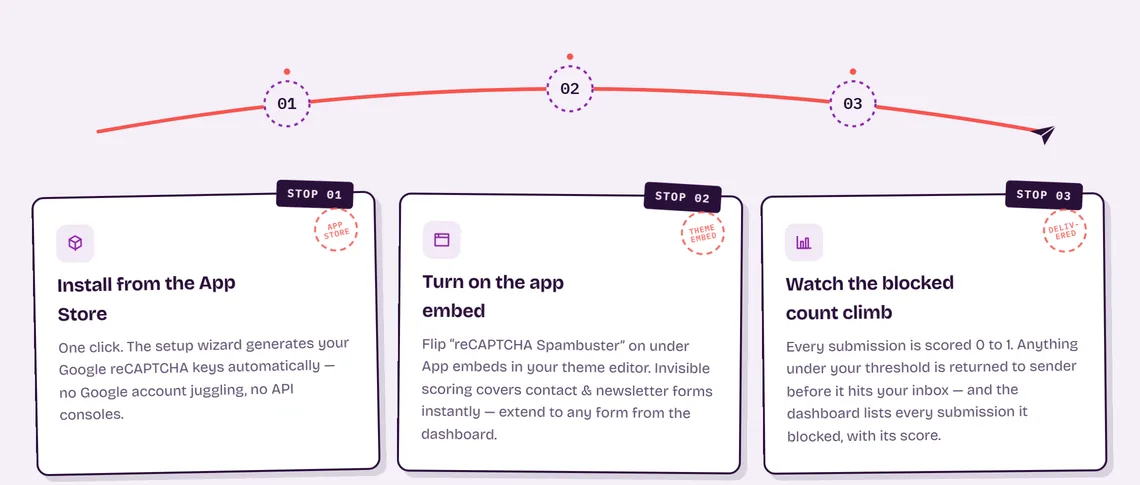
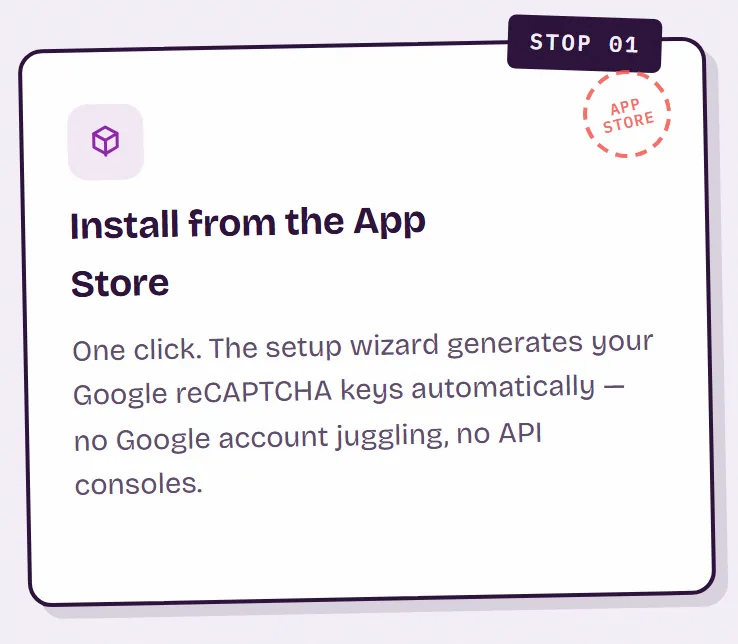
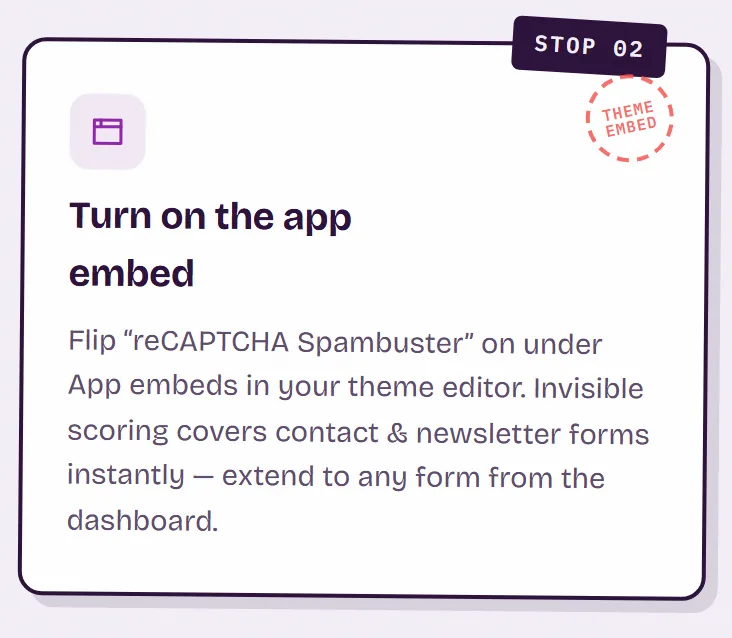
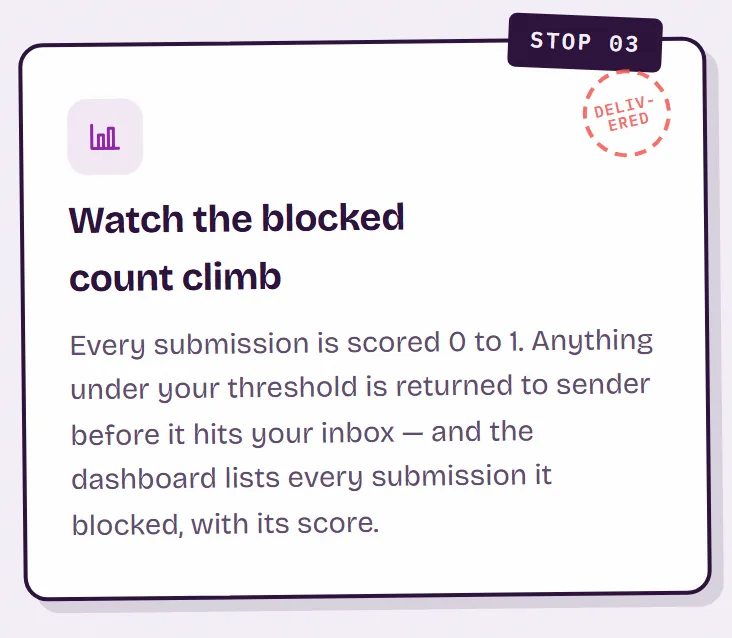
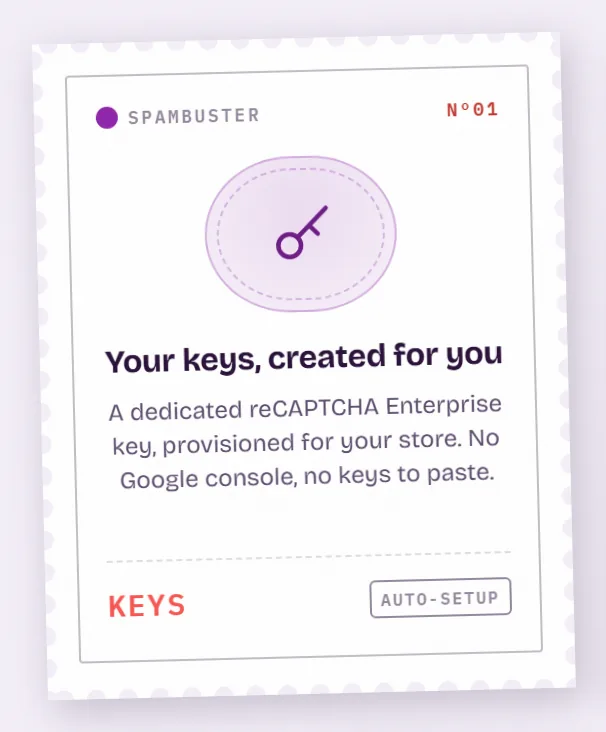
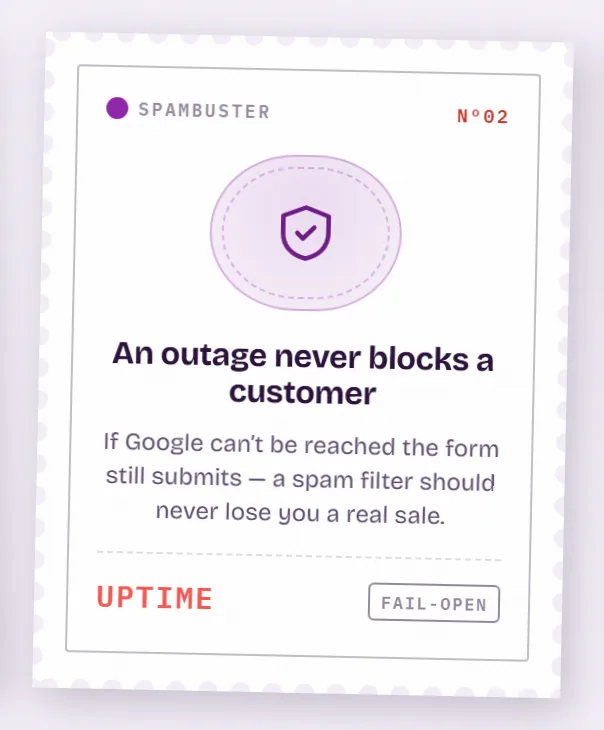
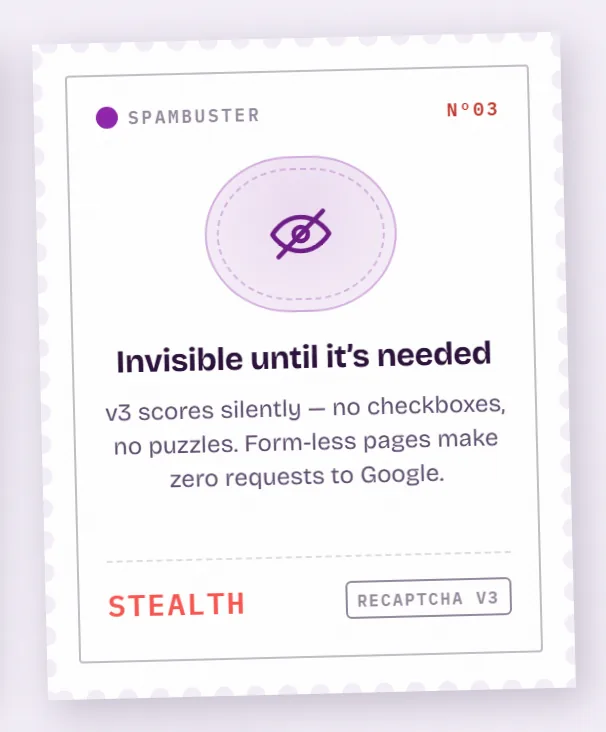
On the product site
Merchants see the stamps before they install.
spambuster.app shows a sample event log, clearly marked as an example. A customer asking about sizes is stamped Passed, and someone selling backlinks is stamped Blocked, which explains the app quicker than a feature list would.

04 · Where AI fits
We left AI out of this one on purpose.
Telling a person from a bot is work Google reCAPTCHA already does, so Spambuster hands that job to it instead of a model of our own.
What we built is everything around that check, so a merchant can switch it on from inside Shopify and get back to running the store.
A spam app doesn’t need to be clever. Its job is to stop the junk and leave the real enquiries alone.
We reach for AI when a product has to read or write something, as Benvena’s Lily does with chat and Cart Spy does when it sums up abandoned carts. Spotting a bot on a form isn’t that kind of job.
05 · How it runs
 From JOLA PTY LTD
Melbourne, Victoria, Australia
We built it, and we still run it.
The code and the App Store listing are both ours, so keeping Spambuster working is our job and nobody else’s.
- A
Shopify changes, so the app has to keep up
When Shopify changes how stores work, Spambuster has to change with it, and that job stays with us for as long as the app is listed.
- B
The listing has to match the app
We keep the App Store listing and spambuster.app in step with the app itself, so what a merchant reads before installing is what they get.
- C
It only looks after forms
Spambuster stops spam and bot submissions on a store’s forms and leaves everything else alone. One job means less to go wrong and less to explain.
- D
The privacy policy comes in five languages
It lives here on jola.com.au, so a merchant can read it before installing. Pick a language below.
06 · For your project
We’d build and look after your Shopify app the same way.
-
01Shopify apps
We’d use what already works, then build the rest.
Spambuster leans on Google reCAPTCHA instead of reinventing it. For your app, we’d look for the parts that already exist, spend the budget on what doesn’t, and keep it updated once it’s listed.
-
02Product sites
Airmail gave a dull app a story to tell.
It also turned the install into three stops on a route. For your product, we’d look for the one picture a merchant remembers.
Got a Shopify problem worth an app?
Tell us what’s slowing your store down. If an app isn’t the answer, we’ll say so.